Generative Typography Experiments
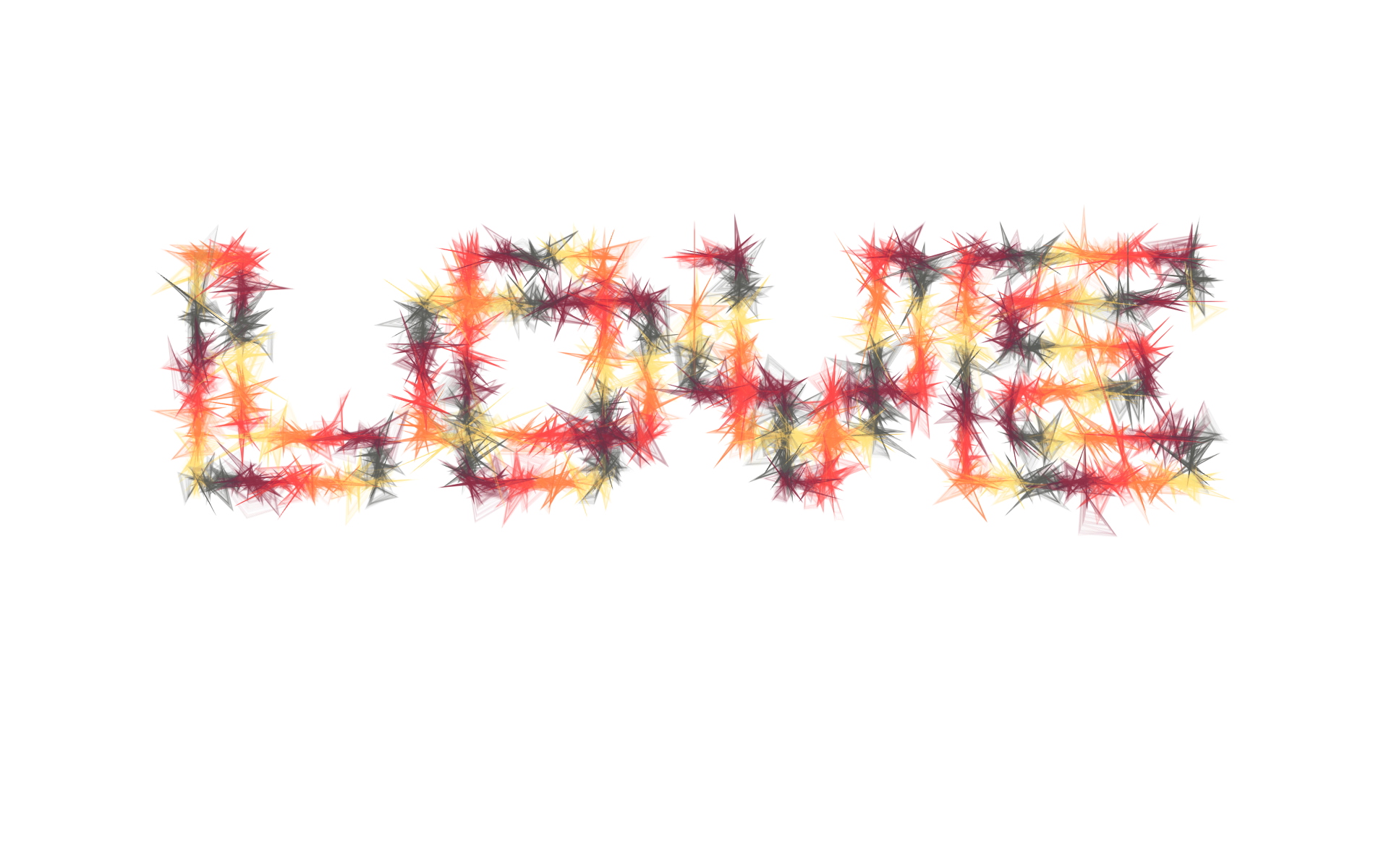
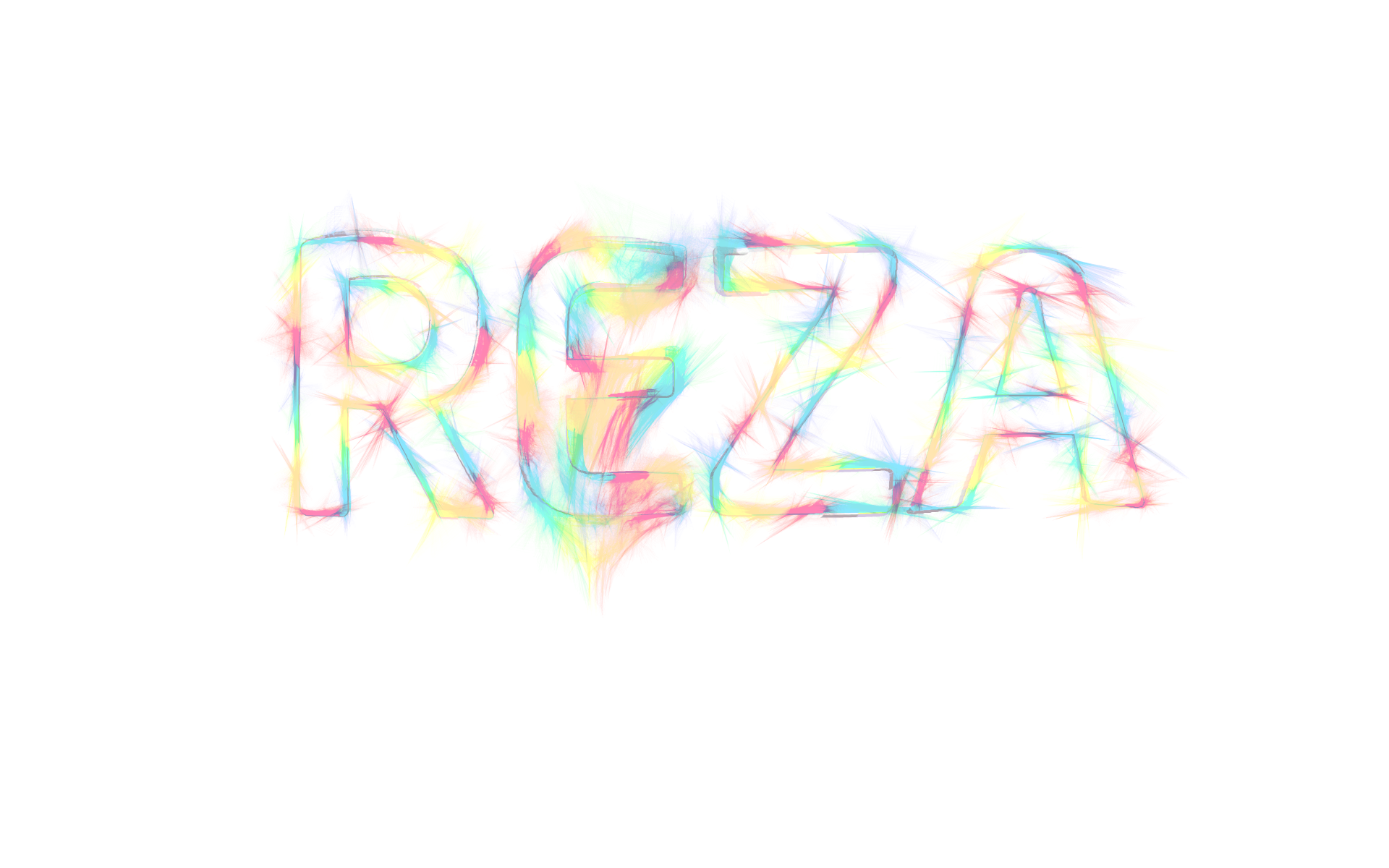
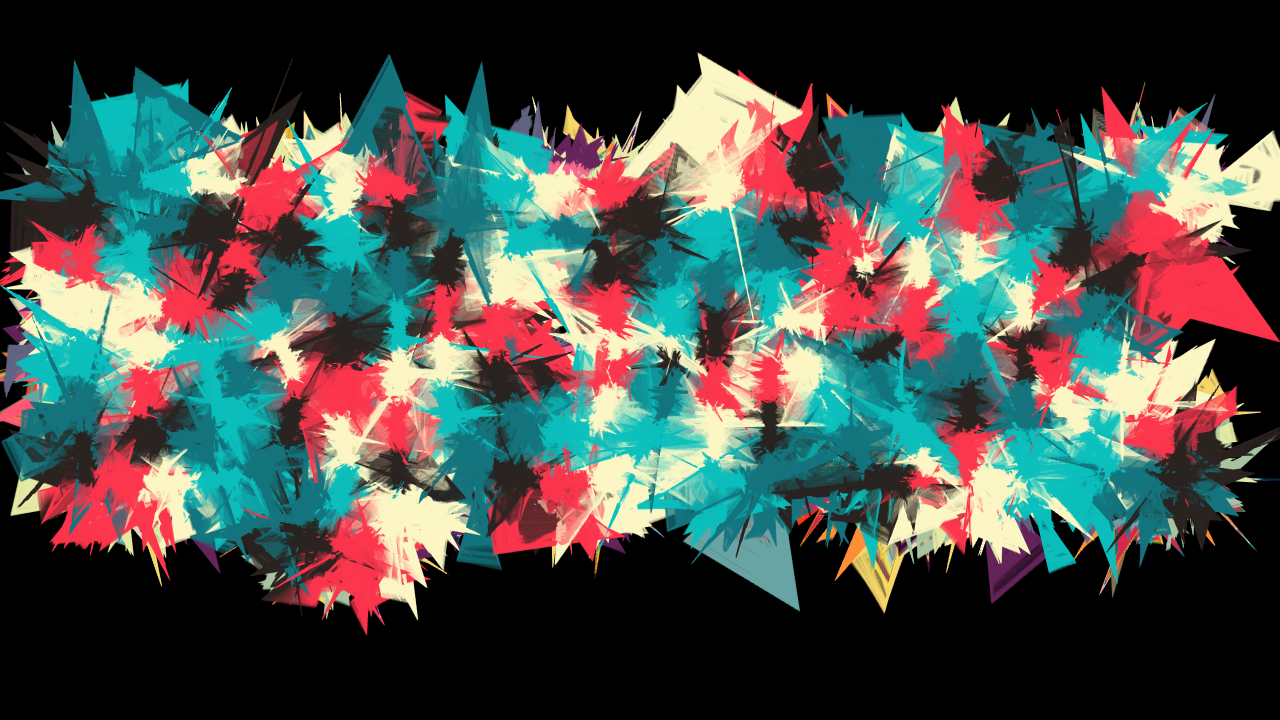
I spent time experimenting with typography, color, simulations (particles, springs, and fluid dynamics), audio inputs, and simple rule-based systems. The images shown here were the result of months of coding, tinkering, and refining algorithms to create generative typography.
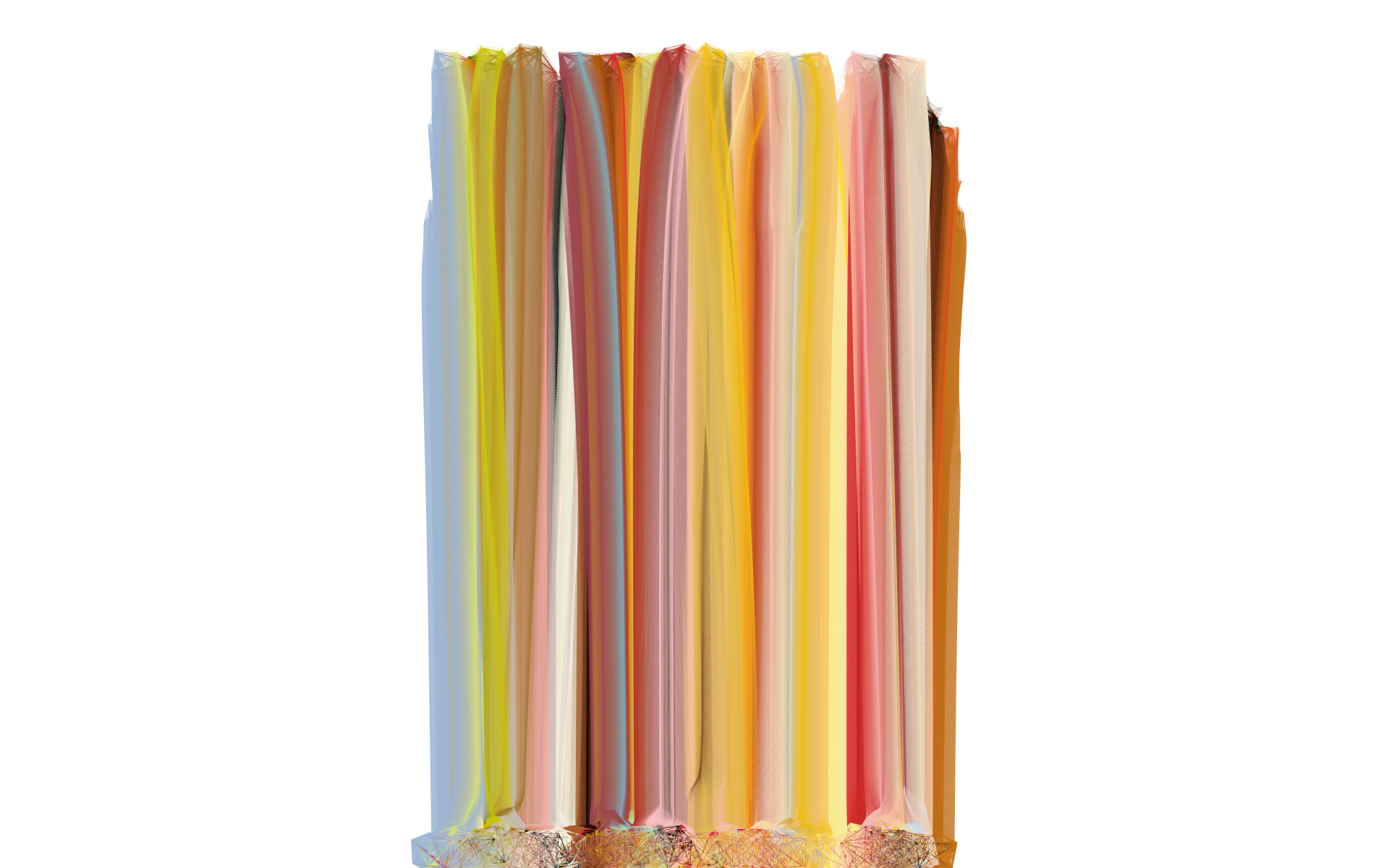
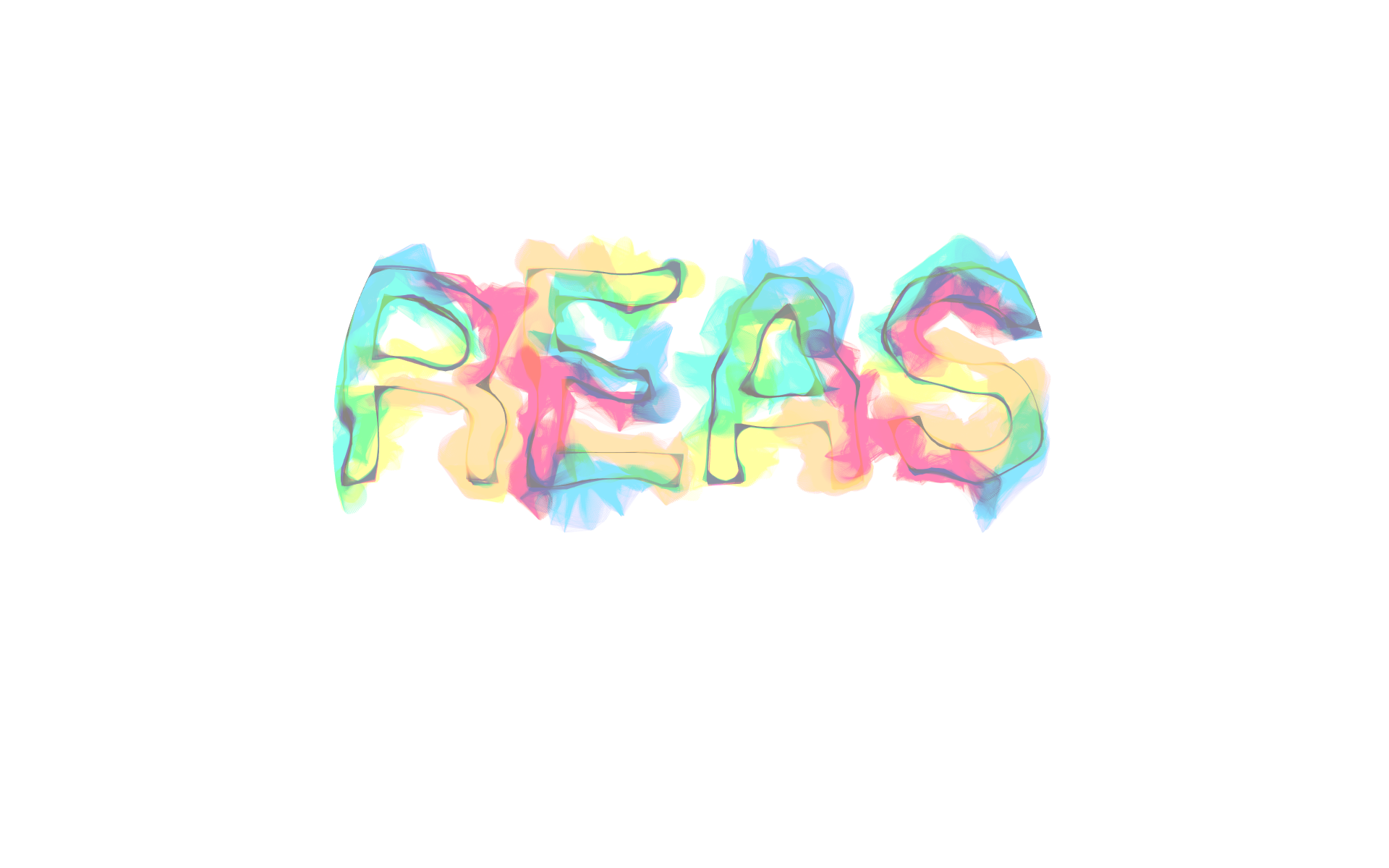
After initially exploring typography and dynamic systems, I began experimenting with color, inspired by Paul Smith's vibrant palette. Although I have always embraced a minimalist aesthetic and often used monochromatic color schemes, incorporating color added a playful personality and made the compositions more visually engaging. The image above is an example of a simple particle-spring simulation where particles melt downward due to gravity but remain bound together by springs.
1 / 6
The first experiment involved making the system responsive to audio. I began by converting the outline of a phrase into a series of vector points, then transformed these points into particles connected with springs. The audio buffer directly influenced each particle's velocity — each particle was assigned a specific sample from the audio buffer, and the sample's value was used as a scalar for the particle's velocity vector. This created a subtle vibration within the composition, effectively visualizing the song's waveform superimposed on the type outline.
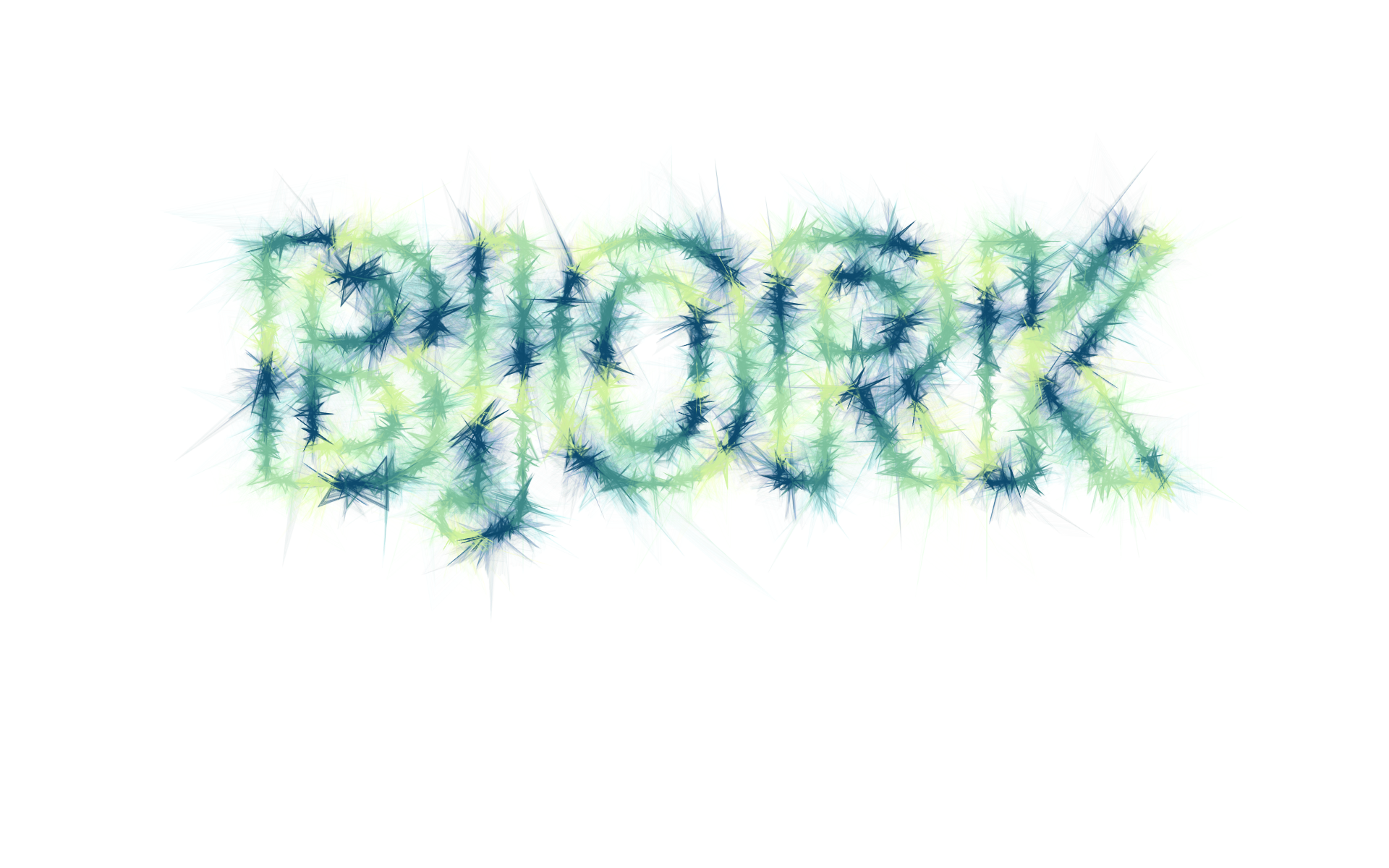
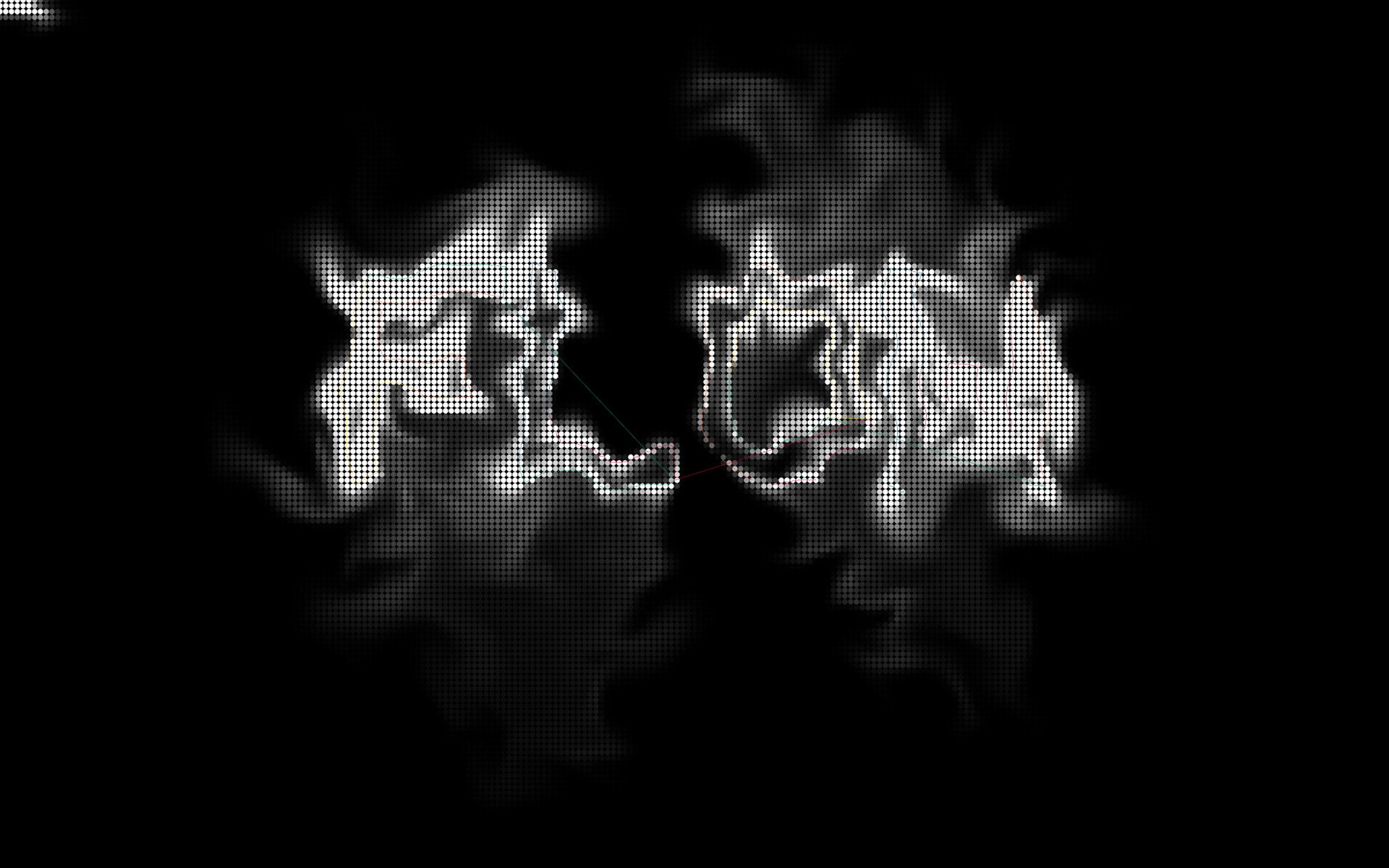
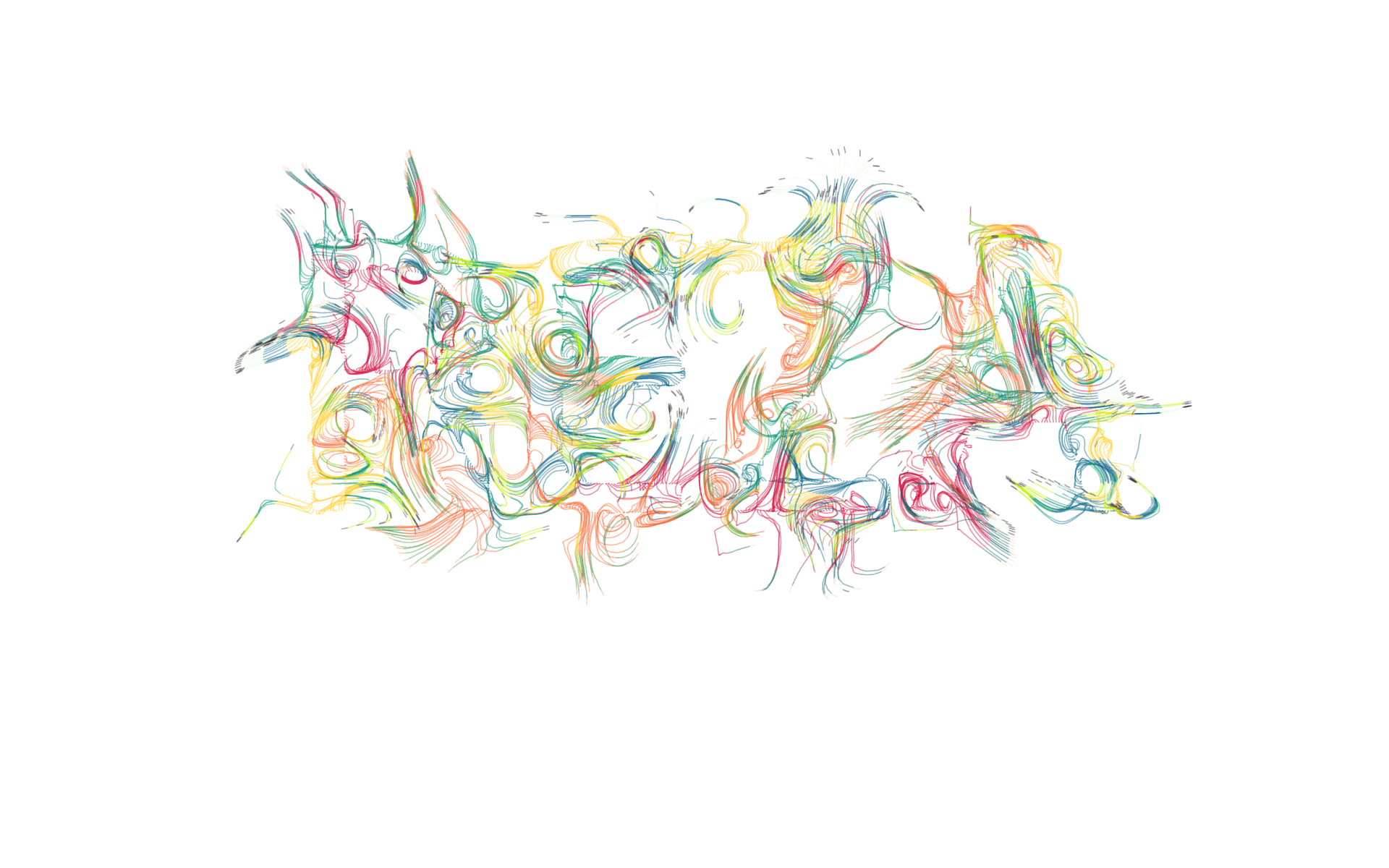
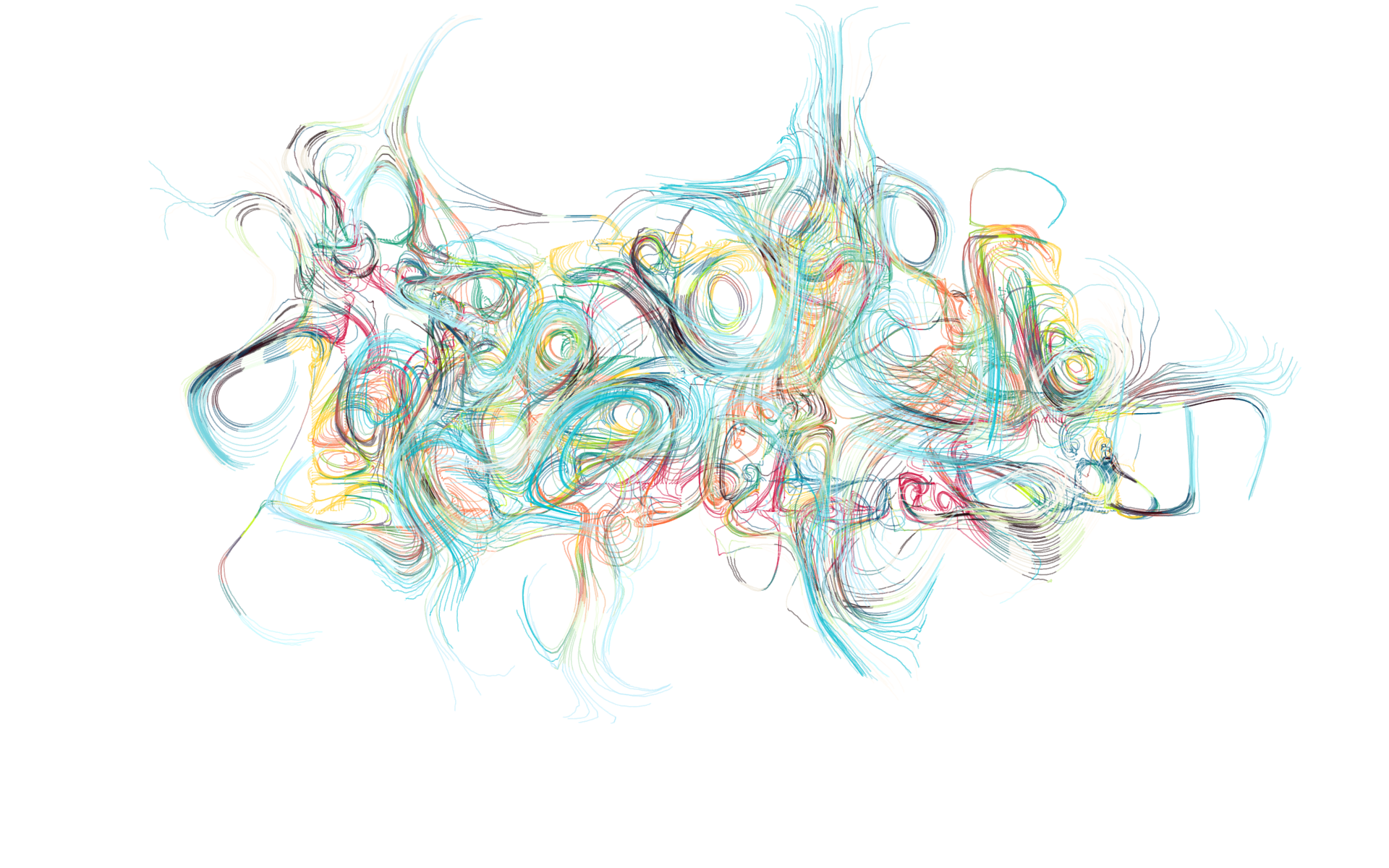
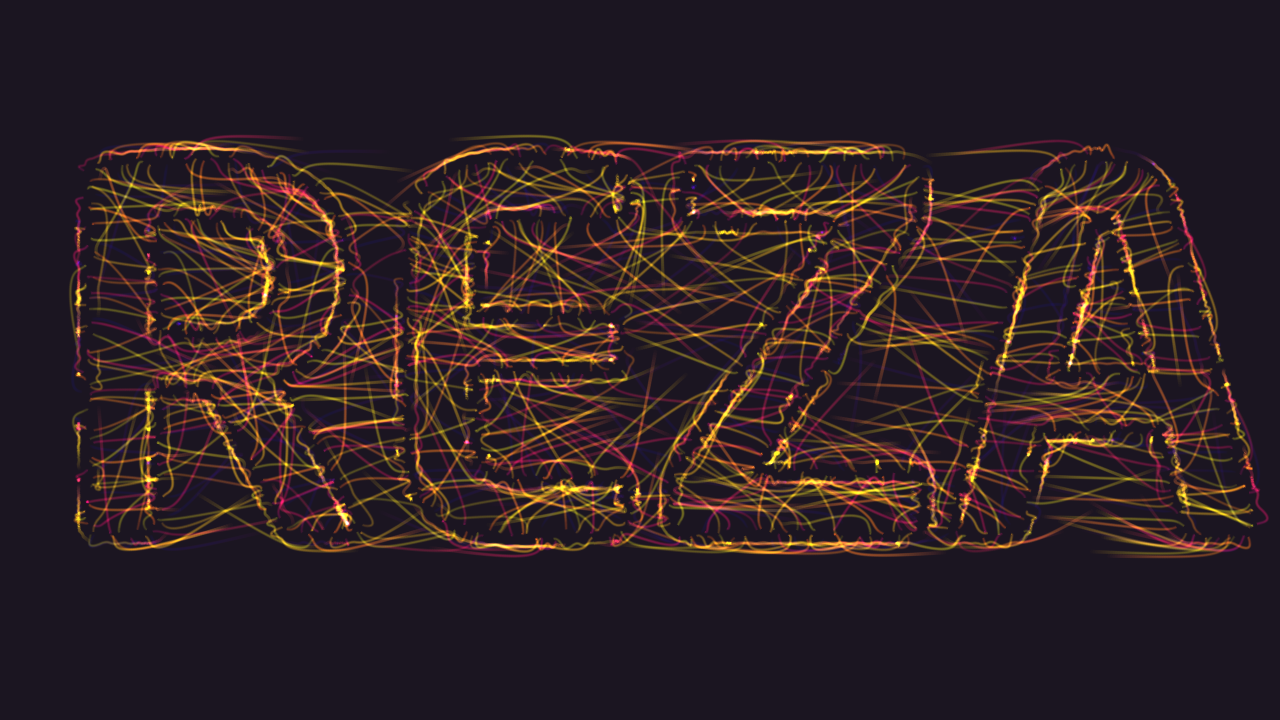
The second experiment involved using a fluid field to influence the movement of the particles. I applied a fluid simulation — based on Jos Stam's Real-Time Fluid Dynamics for Games paper — to affect the particles' velocities. Since the particles were interconnected with springs, the type's outline transformed into a multicolored brush, which I used to "paint" with fluid-like strokes.
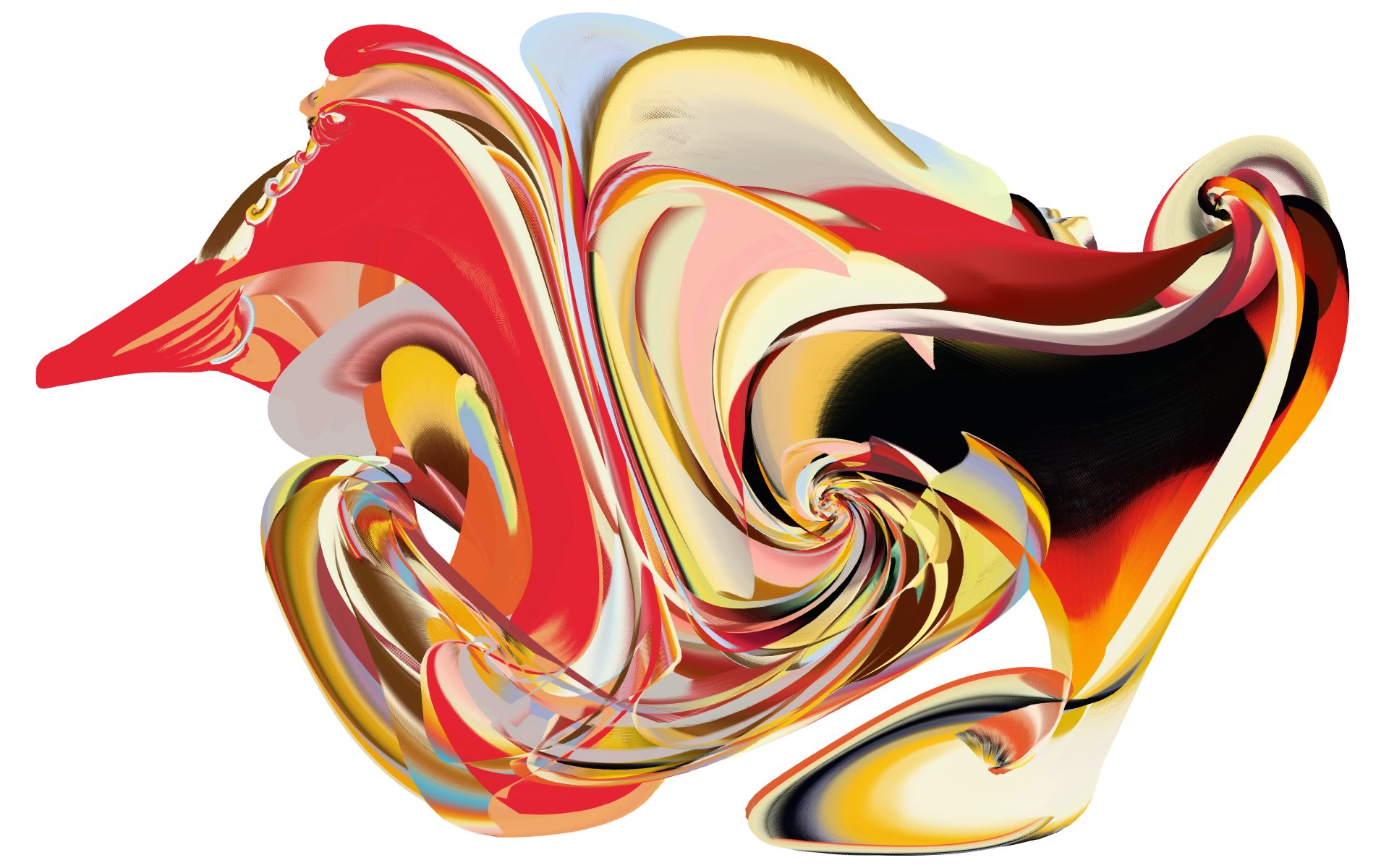
The third experiment extended the previous two by adding behaviors to the particles, such as returning to their original birth position and physical forces like gravity and repulsion. This resulted in a "fluid melt," where the composition slowly dissolved.
1 / 9
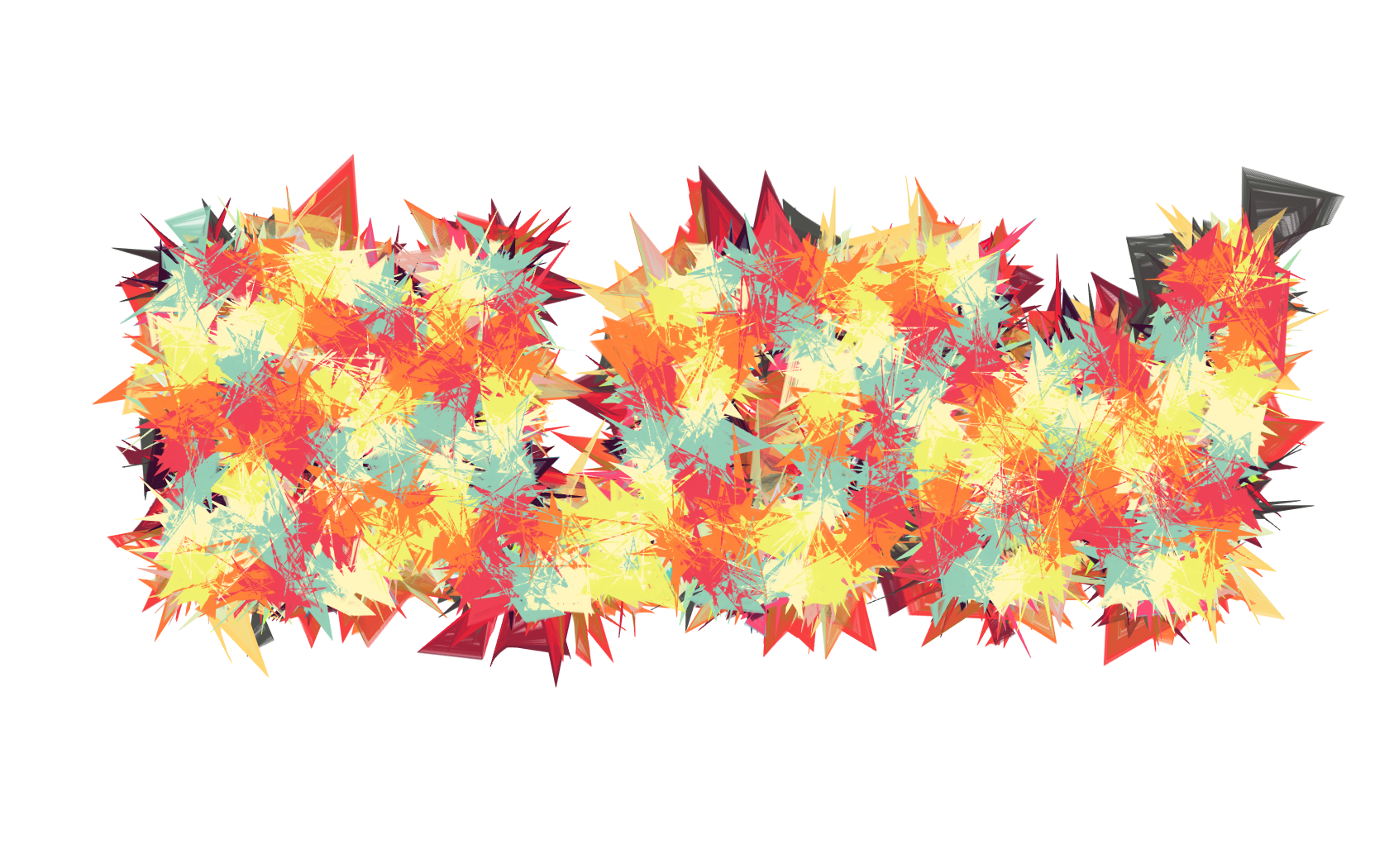
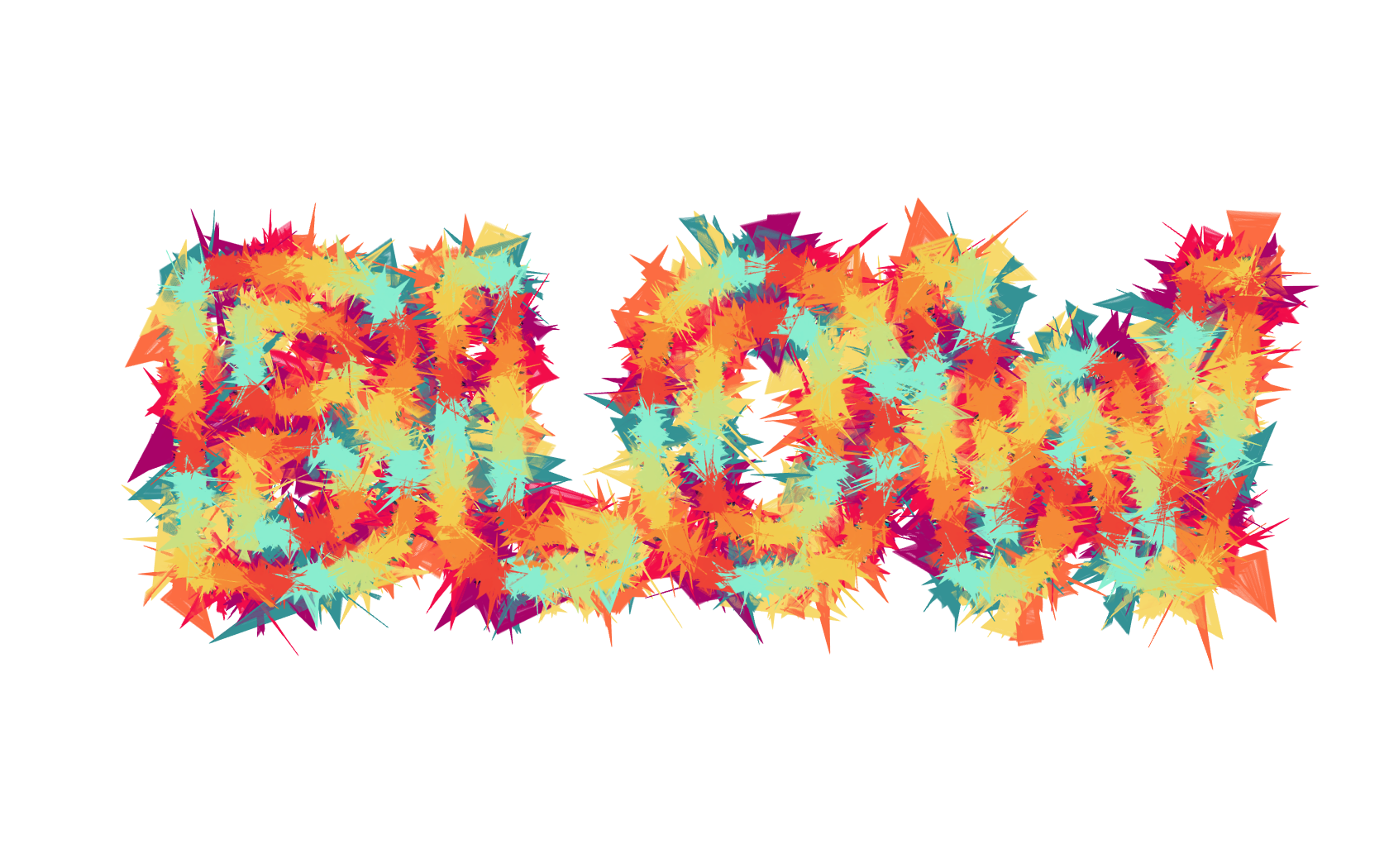
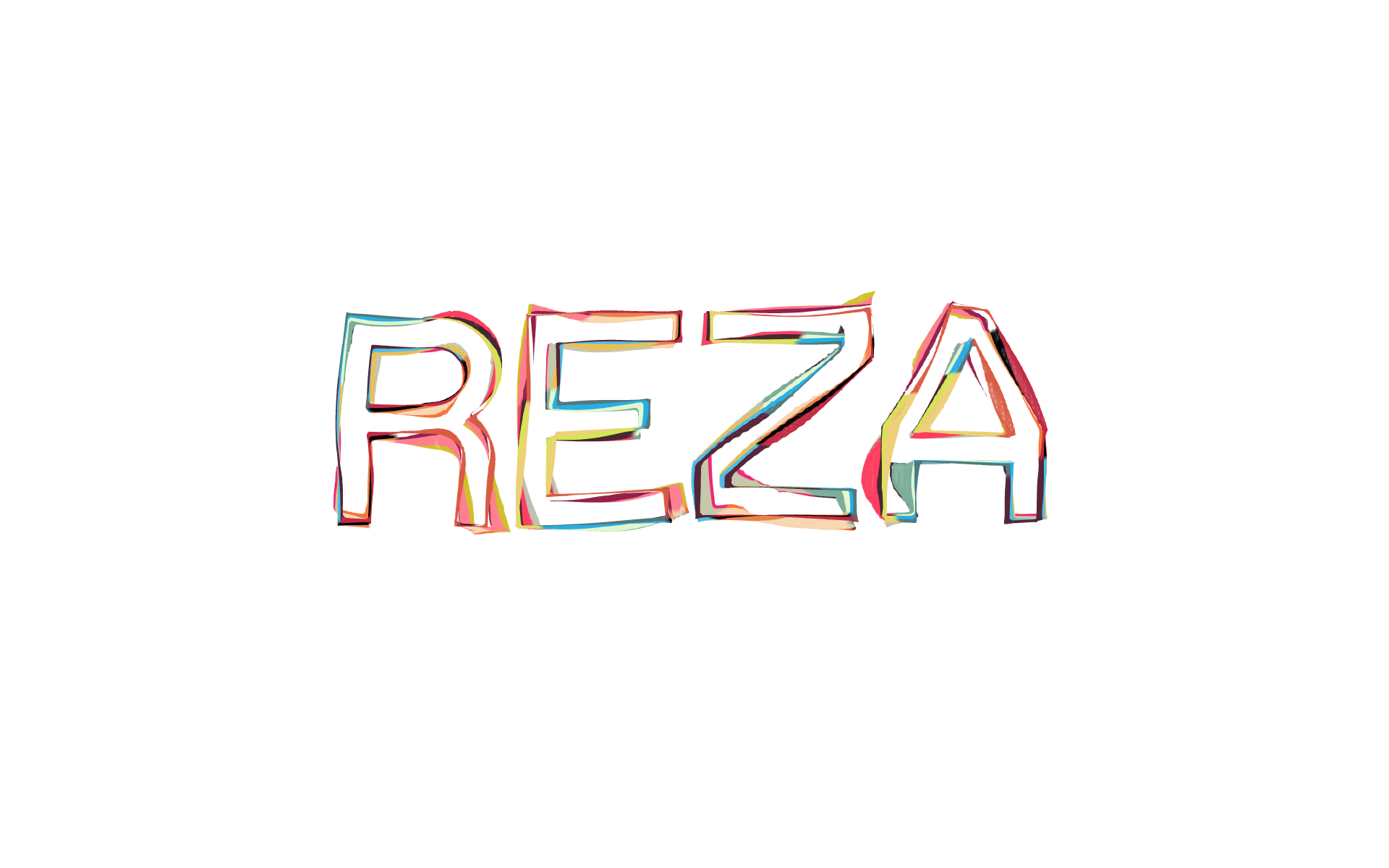
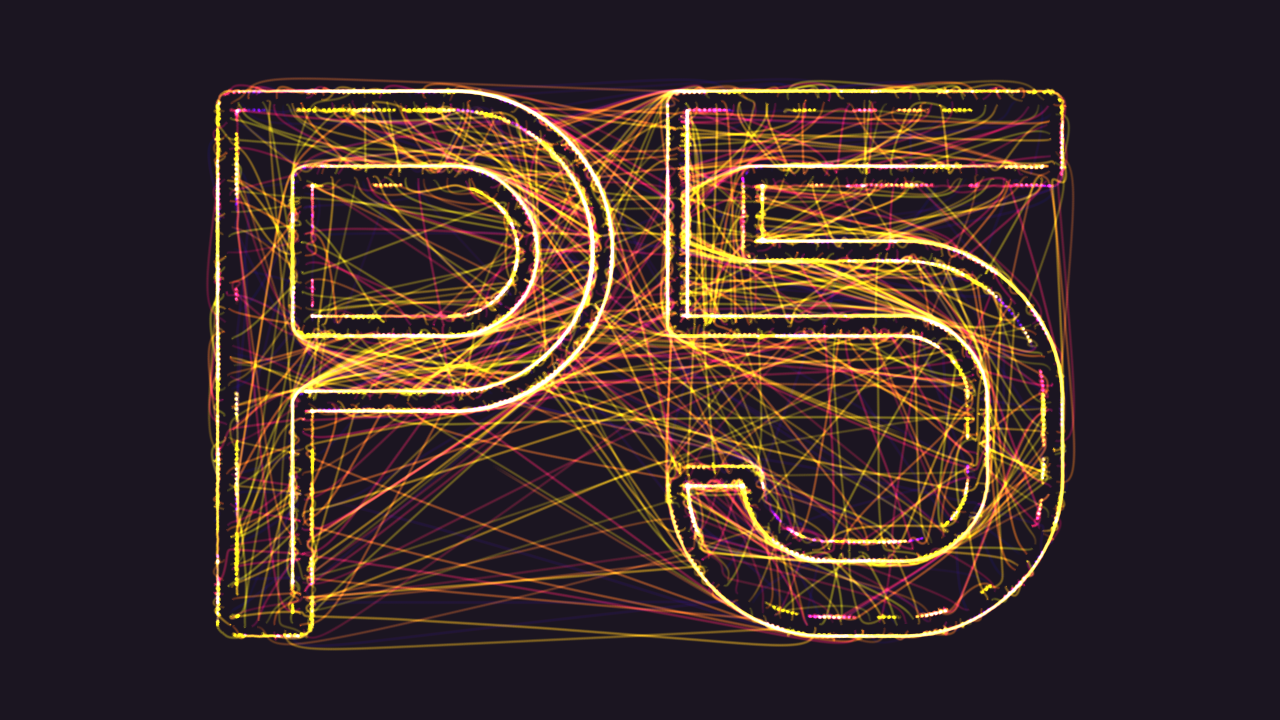
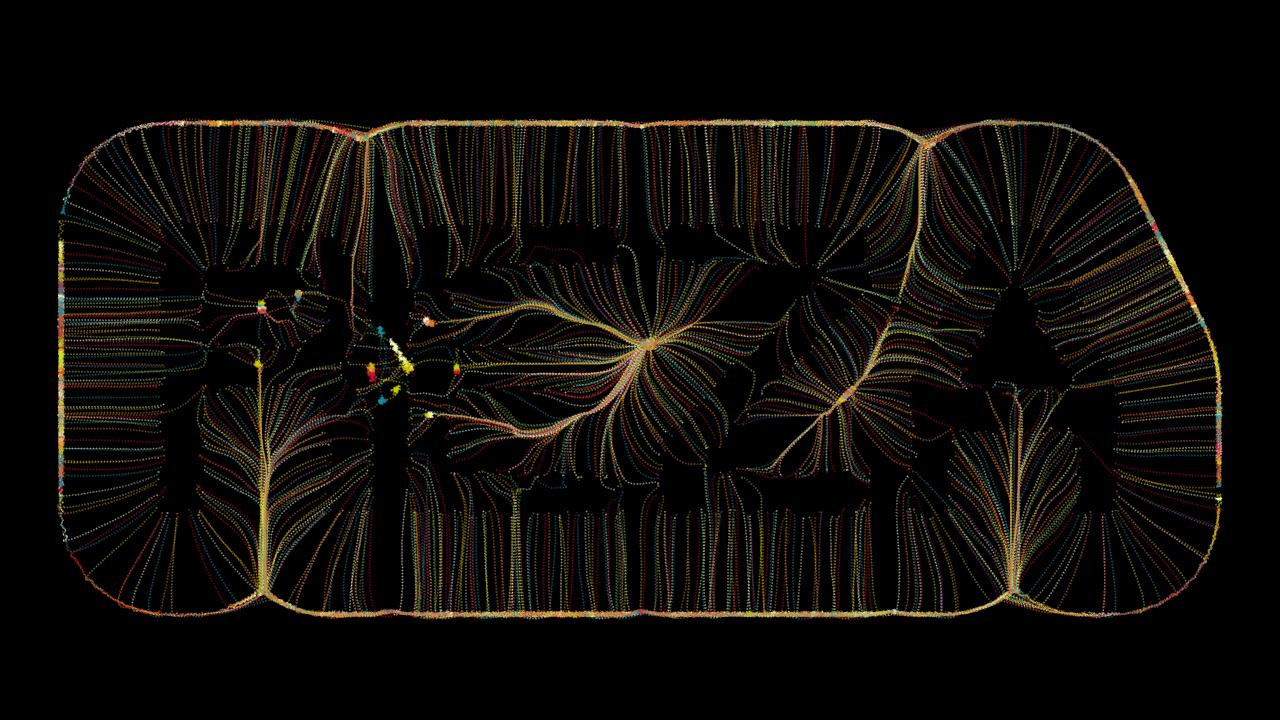
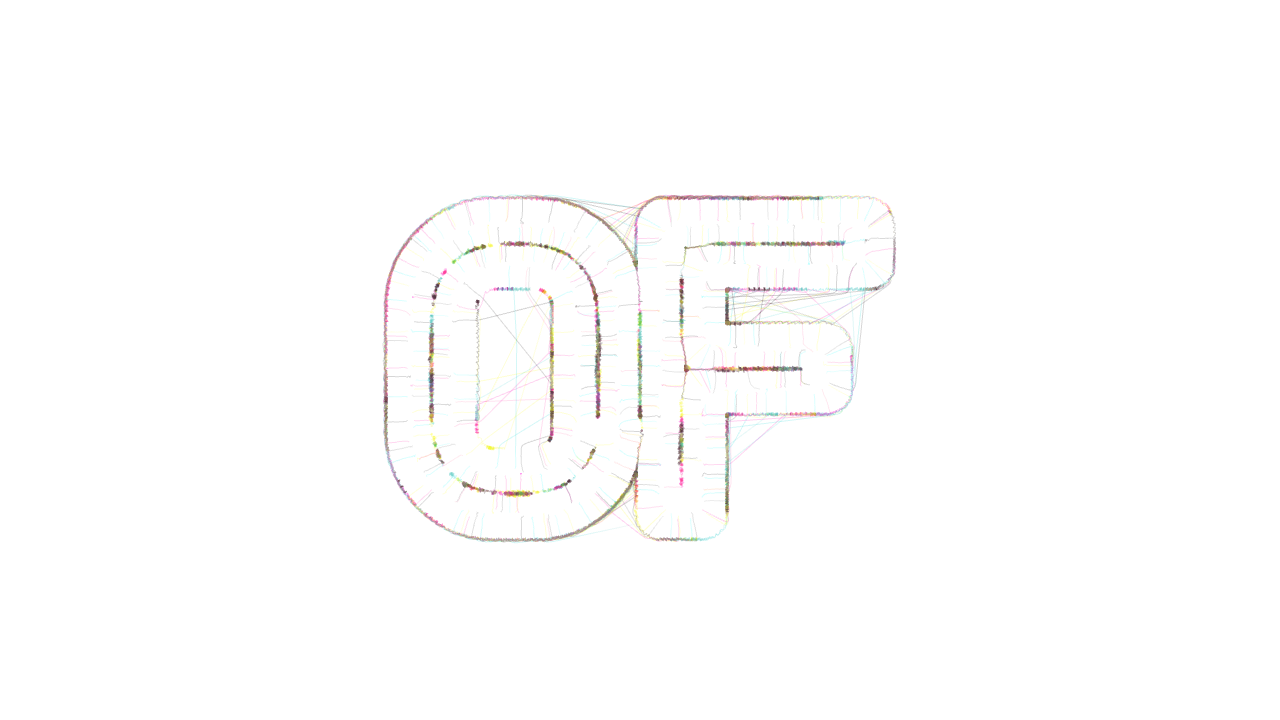
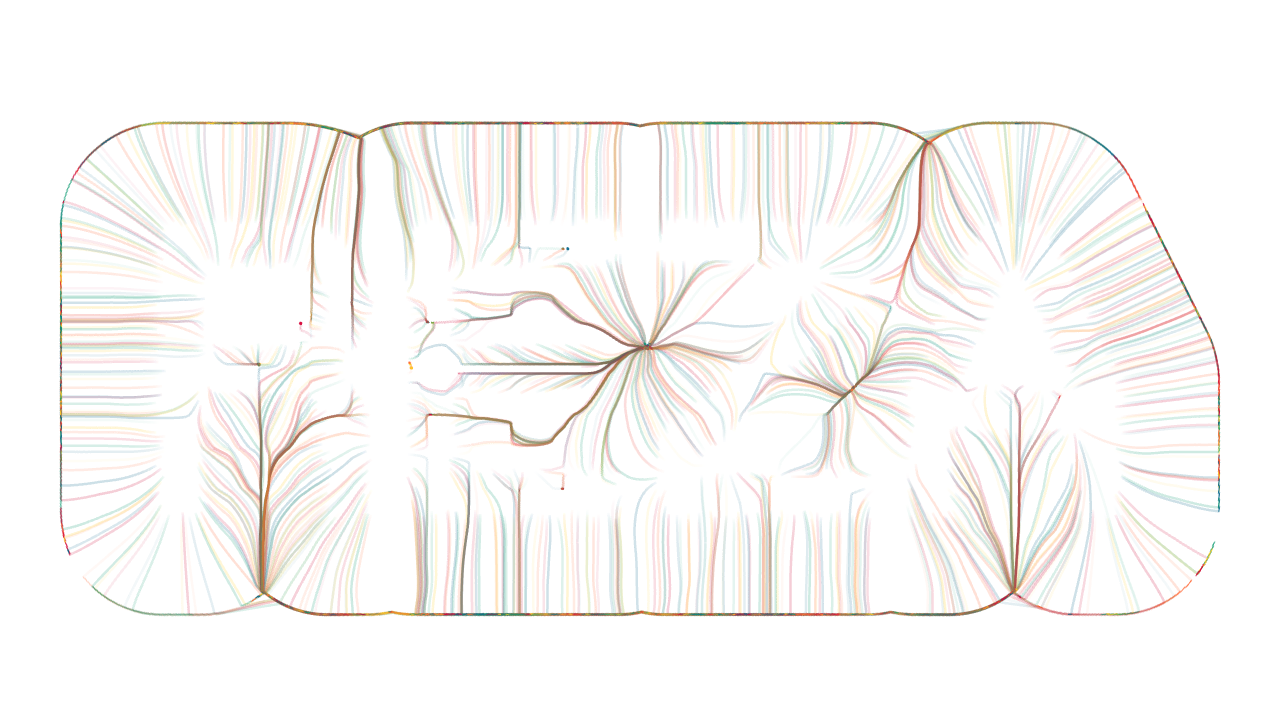
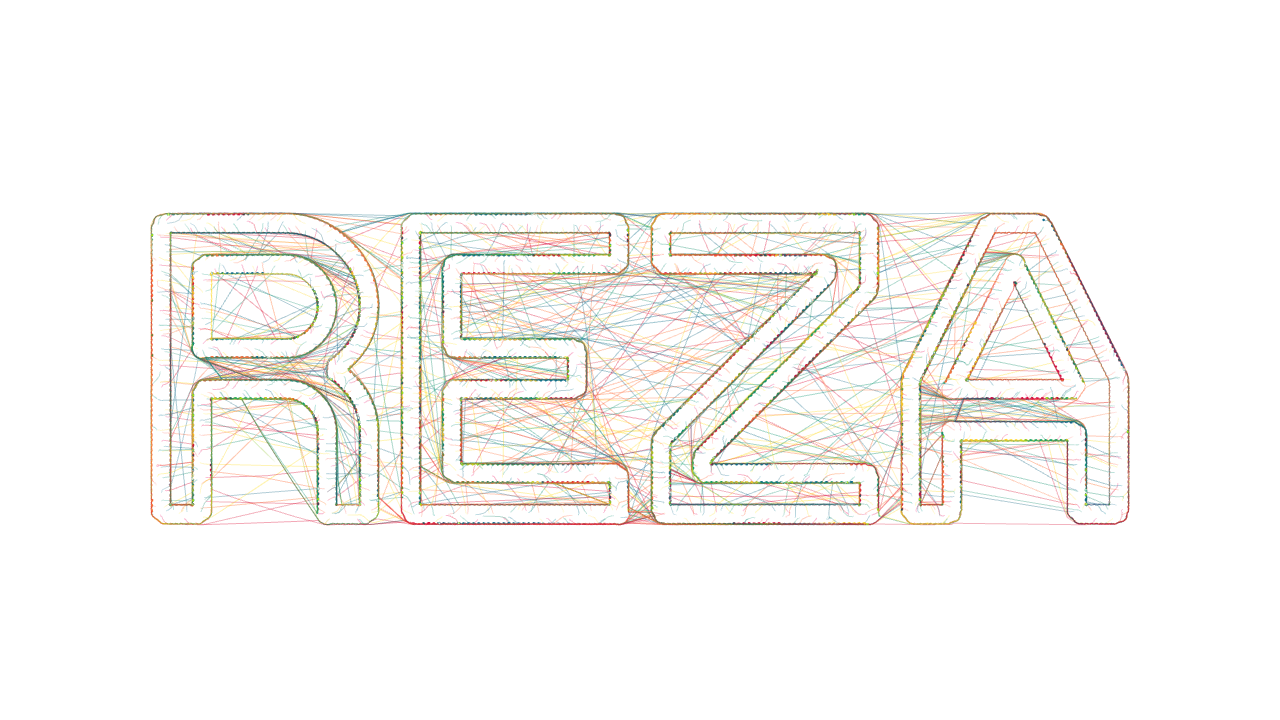
The fourth experiment assigned the particles a mission and a set of simple rules. Each particle was tasked with tracing a path defined by the type's outline. One key rule the particles had to follow was to avoid colliding with other particles while navigating toward their target positions. This resulted in a bold bubble-font-like visual composition.
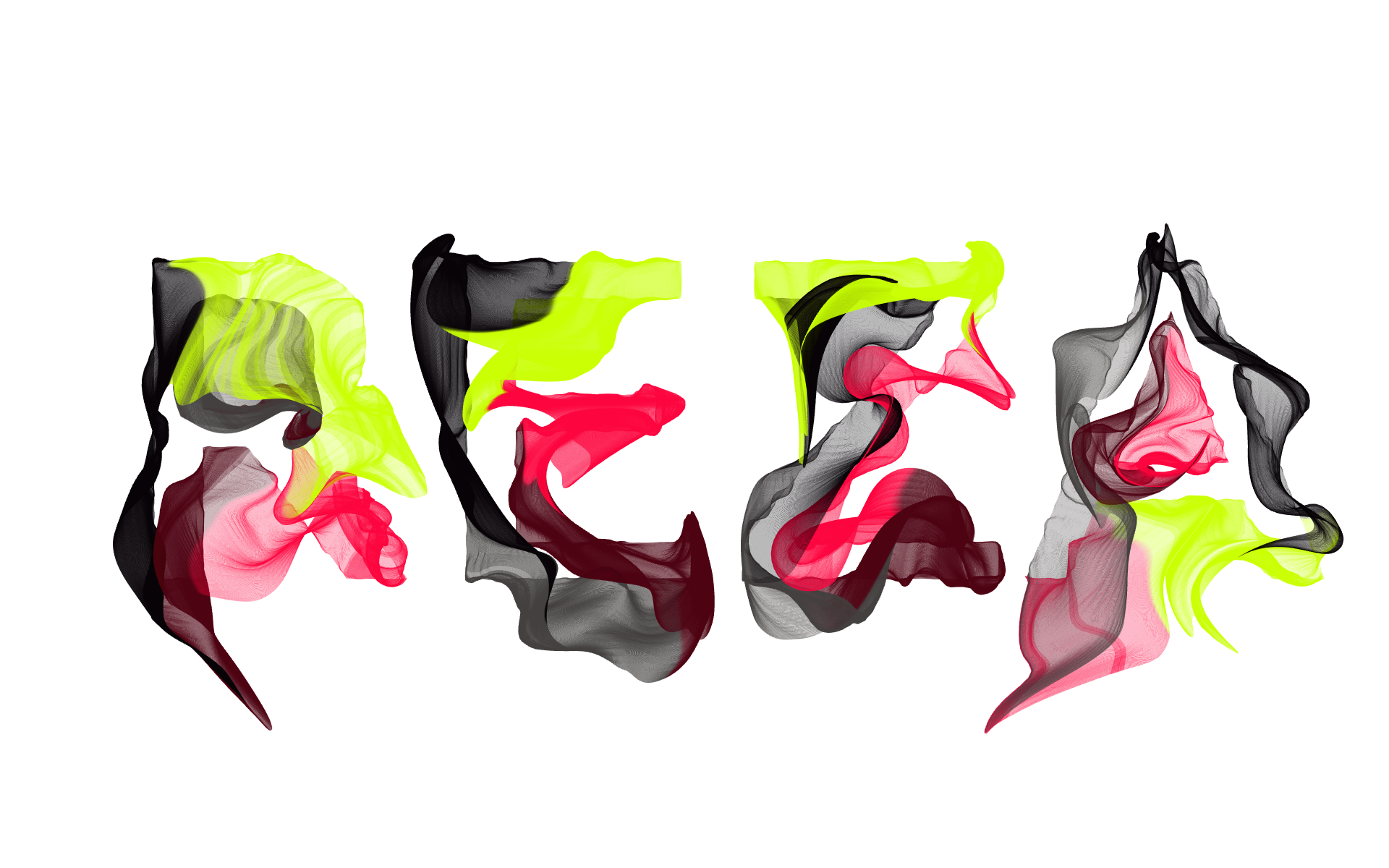
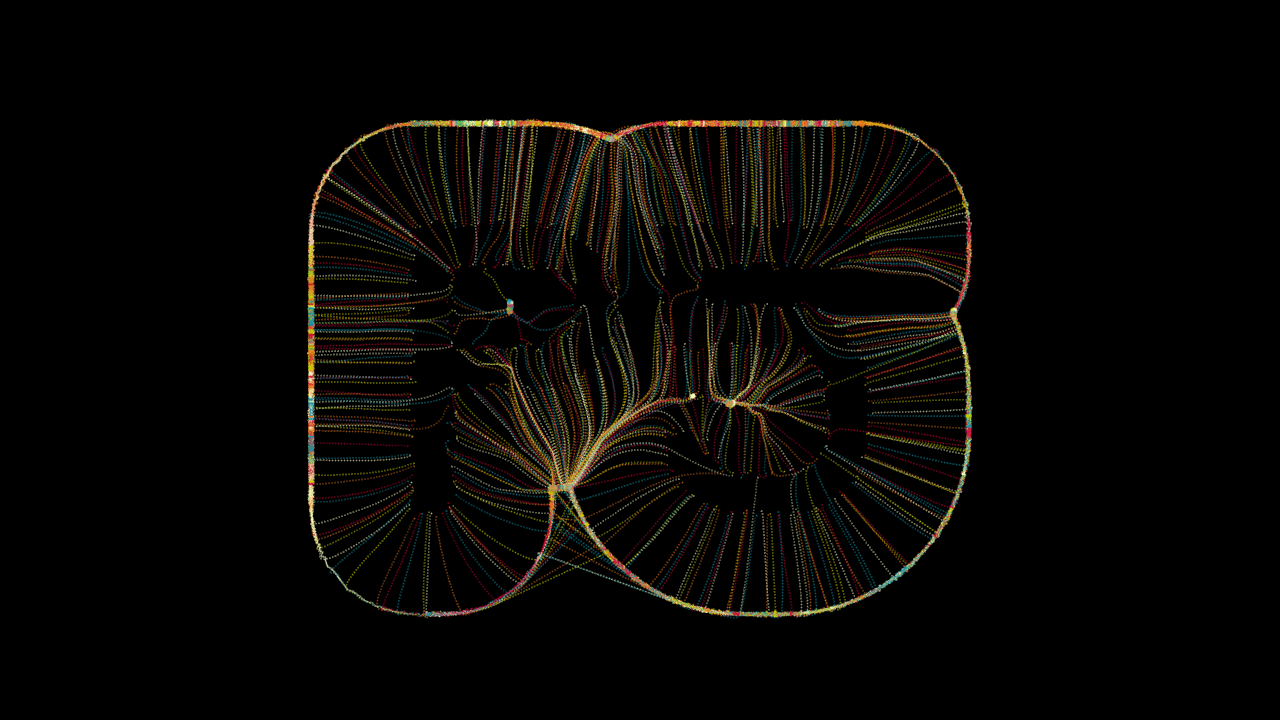
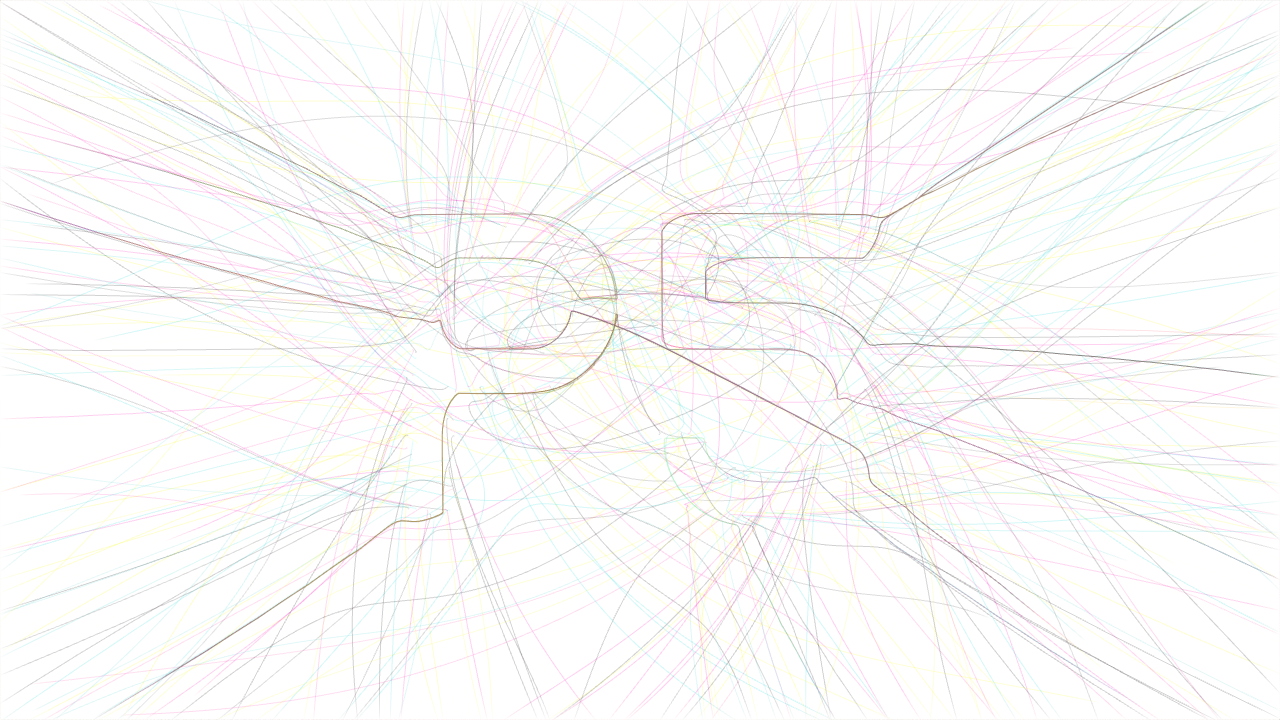
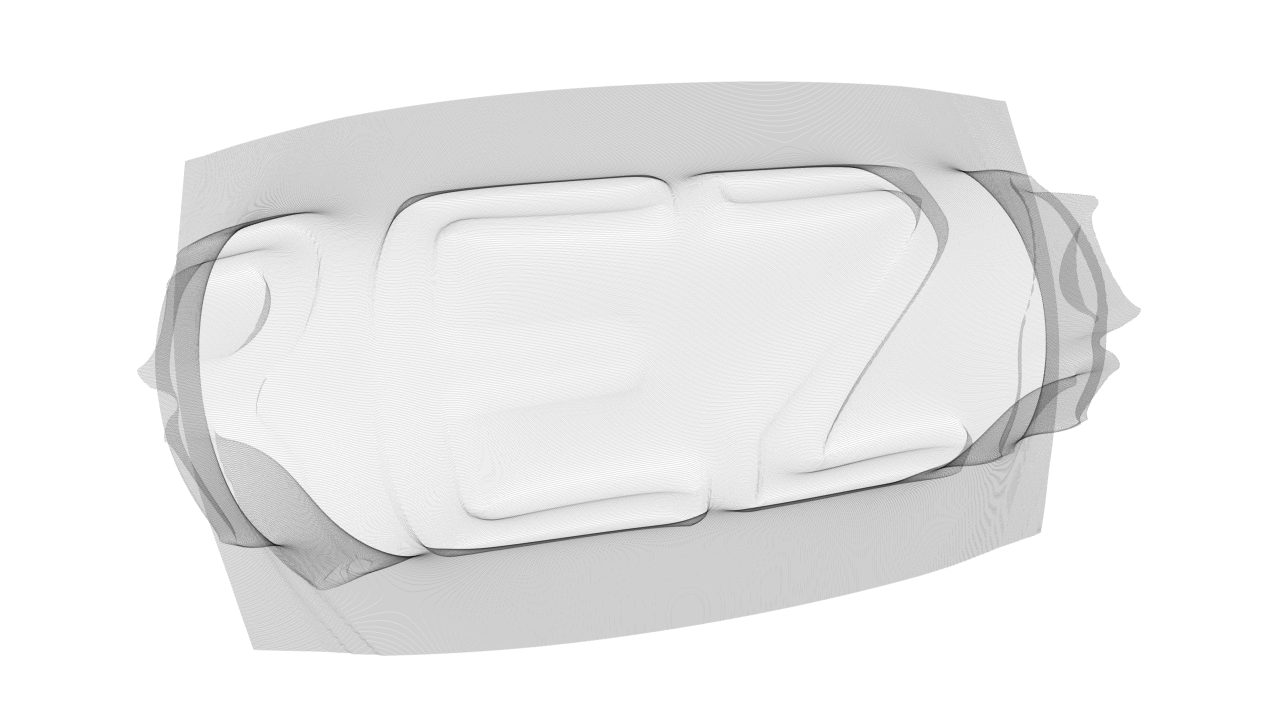
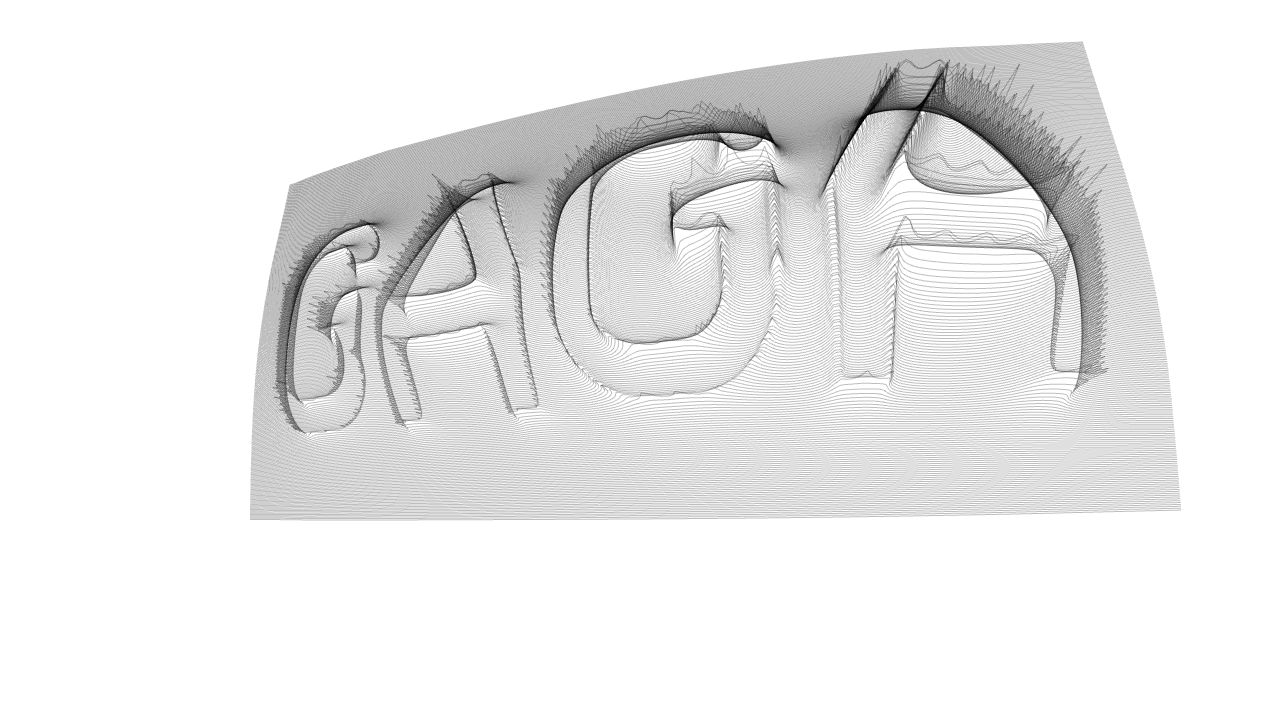
The fifth experiment inverted the approach of the previous ones. I started by arranging strips of particles and springs in 3D space to form a mesh-like grid. Then, a tracer was used to outline the type. The particles repelled away from the traced path, with the repulsion strength proportional to their distance from it. An exponential decay function was applied to refine the effect.
1 / 8
The systems used to create these images are relatively straightforward: springs, particles, typography, and color. For those interested in exploring similar concepts, I highly recommend checking out toxiclibs. I used PeasyCam for 3D camera control and Geomerative for extracting type outlines.
1 / 2
Credits
Designer & Developer: Reza Ali
Output: Prints & Custom Software (Java, Processing)
Year: 2009